
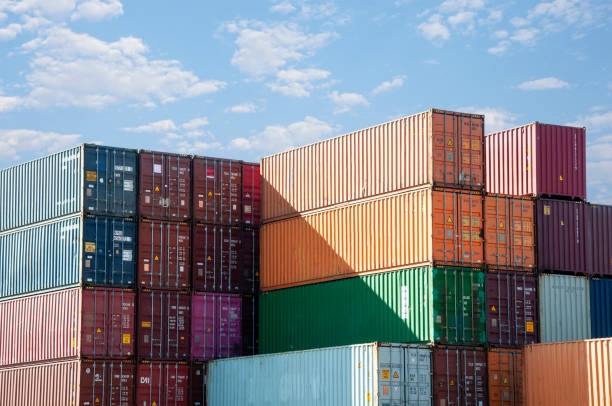
In international trade, how do goods cross mountains and seas to reach their destination? The shipping method you choose directly determines cost, transit time, and cargo safety. Facing air, ocean, rail, road, and multimodal transport, do you fully understand the role each plays? At Z-leading International, we’ve prepared a systematic breakdown of the five core international freight forwarding methods, their advantages, and ideal use cases. This guide will help you, like an expert, select the most efficient and economical movement solution for your cargo.
1. International Air Freight: The “Sky Express” Where Speed Reigns Supreme
When time cost outweighs everything, air freight is the irreplaceable choice.
- Core Advantages: Extremely fast (typically 2–5 days intercontinentally); high safety with minimal vibration; convenient customs clearance via standardized airport facilities.
- Limitations: Limited capacity; high cost (usually 4–5× ocean freight); strict restrictions on dimensions and dangerous goods.
- Best For: High-value, small, and light cargo (electronics, jewelry, precision instruments); time-sensitive goods (urgent orders, fresh products, medical supplies); emergency replenishment during supply chain disruptions.
- One-Sentence Positioning: The top choice to buy time and certainty with money.
2. International Ocean Freight: The “Maritime Giant” Prioritizing Cost
Ocean freight carries over two-thirds of global trade volume and is the absolute backbone of international commerce.
- Core Advantages: Lowest transport cost with significant scale economy; unlimited capacity (from standard containers to mega project cargo); global route coverage.
- Characteristics: Long transit times (20–40 days cross-ocean), susceptible to weather and port congestion; complex processes involving multiple parties; certain maritime risks.
- Main Modes:
- Liner Shipping: Fixed schedules, routes, and ports — the “maritime bus” for most SME shippers.
- Tramp Shipping: Chartering a whole vessel or part of the space — ideal for bulk commodities, liquid cargo, or special project shipments.
- Best For: Bulk, low-value, heavy cargo (raw materials, furniture, machinery); seasonal stock or long-term stable supply chain replenishment with low time sensitivity.
- One-Sentence Positioning: The cornerstone of reducing unit logistics cost and the only way for large-capacity transport.
3. International Road Transport: The “Land Bloodline” with Flexible Connection
Road transport is the most flexible and critical link to achieve true door-to-door service.
- Core Advantages: Extremely high flexibility (no rail restrictions) for precise endpoint delivery; strong connectivity as the core means of cargo collection/distribution at ports, airports, and rail stations; direct executor of door-to-door service.
- Scope: Obvious advantages in short-to-medium distances; plays a key role between land-bordering countries (e.g., China-Europe Railway Express last-mile, Southeast Asia cross-border).
- Core Value: Indispensable in cross-border e-commerce, fresh product transport, and as the first/mile leg of international multimodal transport.
- One-Sentence Positioning: Solves the supply chain’s “first mile” and “last mile.”
4. International Railway Transport: The Stable & Reliable “Land Trunk Line”
Especially under the Belt and Road Initiative, international railway transport has grown significantly.
- Core Advantages: Balances transit time and cost (faster than ocean, cheaper than air); stable operation with high punctuality (less weather impact); good safety, lower risk than ocean freight.
- Typical Representative: The China-Europe Railway Express has become a stable land logistics artery connecting Asia and Europe.
- Best For: Transport between inland points with certain time requirements but strict cost control; the “middle ground” where ocean is too slow and air is too expensive.
- One-Sentence Positioning: The optimal solution between speed and cost for long-haul land routes.
Multimodal Transport: True Wisdom Lies in Combination
Mature supply chain managers dynamically combine the above methods based on product characteristics, inventory strategy, and market demand — e.g., “ocean as main, air for emergencies” or “rail trunk line + road distribution.” Multimodal transport simplifies management and delivers end-to-end peace of mind through a professional general contractor.
🗺️ Decision Guide: How to Match Your Needs
|
Core Consideration
|
Preferred Method
|
Key Reason
|
|---|---|---|
|
Ultimate Speed
|
International Air Freight
|
When time value far exceeds transport cost.
|
|
Ultimate Cost
|
International Ocean Freight
|
Large volume, low time sensitivity.
|
|
Inland Delivery / Distribution
|
Road / Railway
|
Connects ports/airports or land bridge transport.
|
|
Balance of Time & Cost
|
International Railway
|
China-Europe Railway Express as a model.
|
|
Simplified Management, Worry-Free
|
Multimodal Transport
|
Optimized end-to-end solution by a professional general contractor.
|